
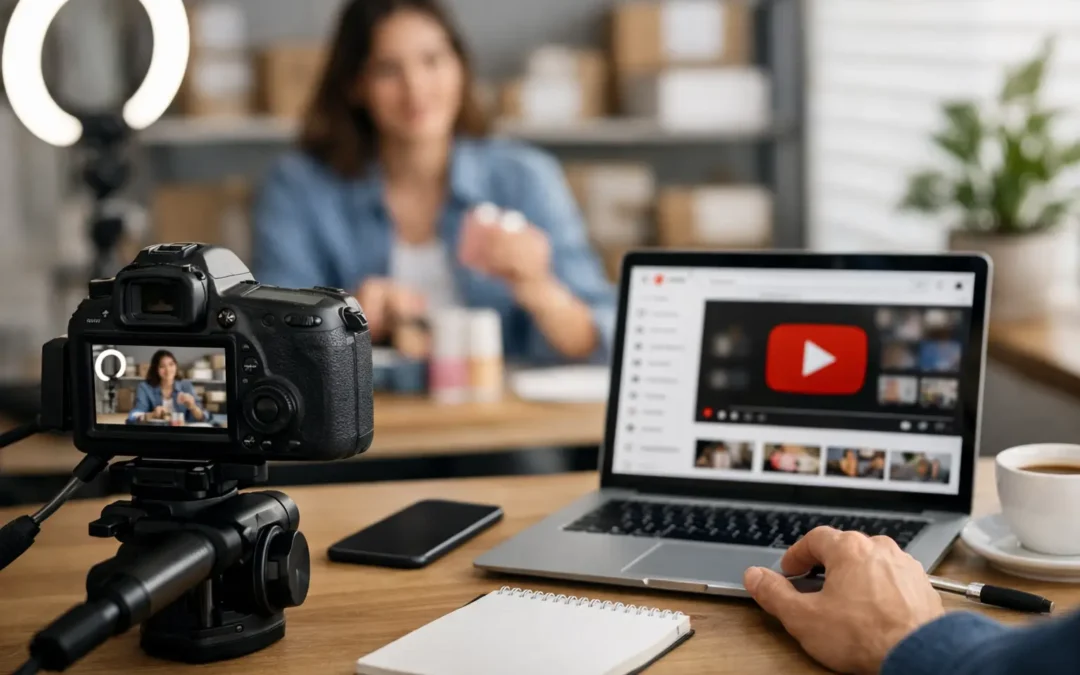
A lot of small businesses start YouTube the same way - with a burst of motivation, a few scattered uploads, and no real system behind them. Then the channel stalls, the views stay low, and YouTube starts to feel like a time sink instead of a growth channel. A strong youtube strategy for small business fixes that by giving every video a job to do.
If you run a local service, ecommerce brand, consultancy, or niche B2B company, the goal is not to post more for the sake of posting. The goal is to publish videos that attract the right audience, build trust faster, and support revenue. That usually means thinking less like a casual creator and more like a business with a focused content engine.
What a YouTube strategy for small business should actually do
A useful strategy does three things at once. It helps people find you, it gives them a reason to trust you, and it moves them closer to action. That action might be a phone call, a demo request, a product sale, an email signup, or even just remembering your brand when they are ready to buy.
This is where many small businesses get off track. They copy big creators, chase broad topics, or make videos that are polished but disconnected from what customers actually care about. A business channel does not need viral entertainment energy. It needs clear positioning, consistent value, and a content plan tied to real business outcomes.
That does not mean every video must be sales-driven. In fact, the channels that convert best usually teach first. They answer questions, solve small problems, and reduce doubt. Sales happen because the content proves competence over time.
Start with business goals, not content ideas
Before you choose topics, decide what YouTube needs to do for your business over the next six to twelve months. For one company, the priority may be lead generation. For another, it may be educating prospects so the sales process gets easier. For a product-based brand, it may be product discovery and post-purchase support.
When the goal is clear, your content choices get easier. A plumbing company trying to generate local leads should not build its channel around random home renovation trends. A software consultant trying to win clients should not spend months on generic motivational content. Relevance matters more than variety.
A simple way to think about this is to group your videos into three functions: discovery, trust, and conversion. Discovery content helps new people find you through search and suggested videos. Trust content shows your process, expertise, and point of view. Conversion content helps viewers understand your offer and take the next step.
Most small business channels need all three, but the balance depends on your sales cycle. If people buy quickly, product demos and comparison videos may matter more. If people buy slowly, educational videos and problem-solving content usually carry more weight.
Pick topics your customers are already searching for
The best small business channels are often built on practical questions. What does it cost? How does it work? Which option is better? What mistakes should I avoid? These are strong video topics because they match buyer intent.
This is one reason YouTube works so well for small businesses. It gives you space to answer the kinds of questions that are too complex for a social post and too important for a vague homepage headline. A five to ten minute video can handle objections, show proof, and explain nuance in a way that builds confidence.
For most businesses, a smart topic mix includes beginner questions, comparison content, process explainers, case-study style videos, and problem-specific tutorials. If you sell services, walk people through what happens before, during, and after working with you. If you sell products, create videos around use cases, setup, troubleshooting, and buyer decisions.
One trade-off to understand early: broad topics can bring more traffic, but narrow topics often bring better leads. A video with 800 views from the right audience can outperform a video with 20,000 views from the wrong one. That is why your content strategy should be built around qualified attention, not vanity metrics.
Build a simple YouTube funnel
A youtube strategy for small business works best when videos connect to each other instead of existing as one-off uploads. Think in sequences, not isolated content.
A potential customer might first find you through a search-based video like “How to choose the right bookkeeping software for a small retail business.” From there, they might watch a comparison video, then a client results story, then a video explaining your process. That progression matters. It turns passive watching into informed interest.
You do not need a complicated funnel map. You just need to know which videos introduce the problem, which videos deepen trust, and which videos help someone decide. When planning content, ask what the viewer should watch next and why. That one question can make your channel much more effective.
Create videos you can sustain consistently
A lot of business owners overestimate what they can produce each month. They imagine weekly cinematic videos, then fall behind by week three. The better approach is to choose a format you can maintain without draining the business.
For many small businesses, consistency comes from repeatable formats. That might be talking-head explainers, screen recordings, product walkthroughs, customer Q and A videos, or simple behind-the-scenes breakdowns. You do not need a studio-level production setup to build trust. You need clear audio, a useful topic, and a structure that respects the viewer's time.
Production quality still matters, but mostly when poor quality creates friction. If lighting is bad, audio is distracting, or the video rambles, retention drops. On the other hand, a clear and helpful video with modest production can outperform a polished video with no strategic value.
Don’t treat SEO as an afterthought
YouTube SEO is not just about sprinkling keywords into titles. It starts with choosing topics people are actually searching for, then packaging those topics in a way that earns clicks and watch time.
For small businesses, titles should be specific and outcome-focused. Thumbnails should make the topic instantly understandable. Descriptions should support clarity, not fill space. The opening 30 seconds should confirm that the viewer is in the right place and explain what they will get.
Search matters most when your audience has clear questions. Suggested traffic matters more when your content has strong viewer satisfaction and clear topic relationships. In practice, that means some videos should target high-intent search terms, while others should strengthen your channel's authority around a narrow niche.
If you are new to this, keep it simple. Focus on topic clarity, audience relevance, click-through rate, and retention. Tubeskill often teaches creators to stop obsessing over hacks and start improving the basic signals YouTube actually responds to.
Measure the right metrics
Views are useful, but they are incomplete. A business channel should also track watch time, click-through rate, audience retention, subscriber quality, lead behavior, and conversion signals.
For example, if a video gets fewer views but generates stronger inquiries, that is a win. If a topic attracts traffic but those viewers never watch another video, it may be too broad. If people click but leave quickly, your packaging may be stronger than the content itself.
Analytics become much more useful when you review them against a goal. Ask which videos attract ideal customers, which ones hold attention, and which ones push viewers deeper into your content. Patterns matter more than one-off spikes.
A practical content plan for the first 90 days
If your channel is small or inconsistent, the first 90 days should focus on momentum and clarity. Publish a core set of videos that cover your audience's most common questions, your main offer area, and your strongest proof points.
A strong early library often includes one or two beginner-friendly videos, a few problem-specific videos, at least one comparison or decision-stage video, and one video that clearly explains your process or product value. That mix gives new viewers more than one entry point.
You can also repurpose smartly. One customer conversation can become a full YouTube video, a shorter clip, and the basis for future topics. Small businesses usually have more content material than they think. Sales calls, onboarding questions, customer objections, and support requests are often your best strategy documents.
What small businesses should avoid
The biggest mistake is posting without a clear audience in mind. The second is making every video about the company instead of the customer. People come to YouTube for help, answers, and insight. Your brand earns attention by being useful first.
It also helps to avoid copying creator tactics that do not fit your model. Fast trends, broad lifestyle content, and entertainment-first formats can work, but only if they support your business goals. For many small businesses, focused educational content has a better long-term return.
There is also an impatience problem. YouTube is powerful, but it rarely rewards scattered effort. The businesses that win are usually not the ones posting the most. They are the ones building a clear body of work around the problems they are best positioned to solve.
If your channel feels messy right now, that is fixable. Start with the customer, define what success looks like, and build a small set of videos that do one job well. When your content is aligned with business goals and audience intent, growth stops feeling random and starts feeling earned.