
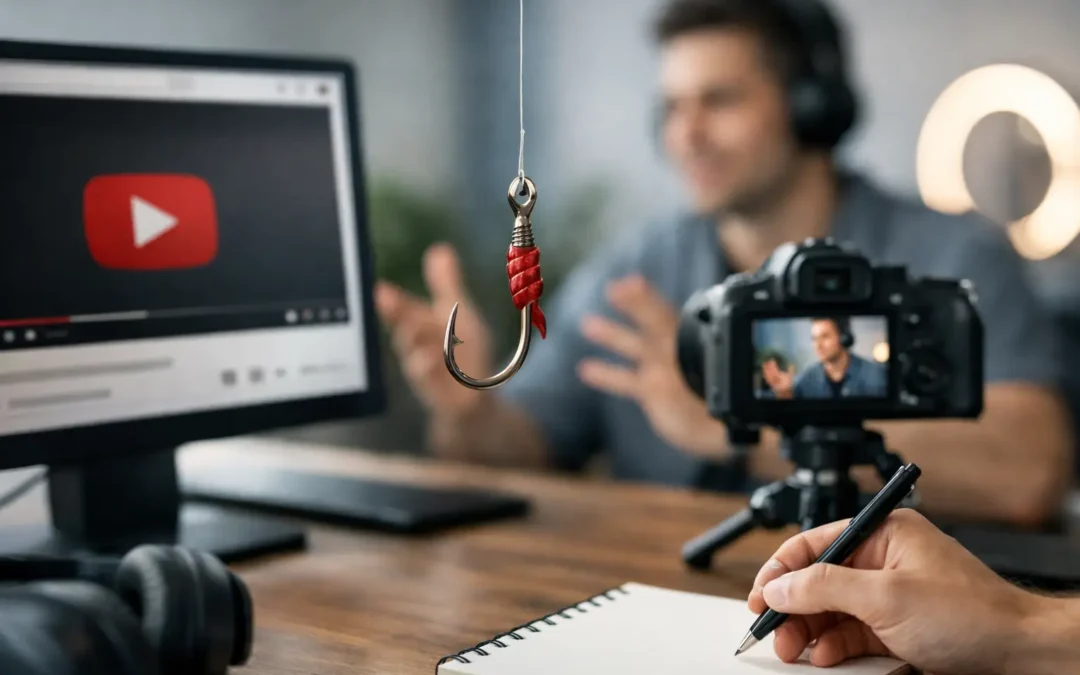
Most viewers decide within seconds whether your video deserves their next minute. That is why learning how to create YouTube hooks is not a small editing trick. It is one of the clearest skills that separates videos people click from videos people actually keep watching.
A strong hook does not mean being louder, more dramatic, or more clickbait-heavy. It means giving the viewer a reason to stay right now. On YouTube, that reason usually comes down to one of three things: curiosity, relevance, or a promised result. If your opening delivers one of those fast, your retention gets a real chance. If it does not, even a great video can lose momentum before it starts.
What a YouTube hook actually does
A hook is the opening moment that creates forward motion. It tells the viewer, often in just one or two lines, why this video is worth their attention. That can happen through a bold claim, a clear problem, a surprising result, or a direct promise.
The mistake many creators make is confusing a hook with an introduction. An introduction explains who you are, what your channel is about, or why you made the video. A hook is more focused. It answers the viewer's unspoken question: why should I keep watching this?
That distinction matters because viewers are not looking for context first. They are looking for payoff. You can build trust and personality later, but the first job is to earn the next 10 to 30 seconds.
How to create YouTube hooks that fit your audience
The best hooks are not universally clever. They are specifically relevant to the person clicking. A beginner creator searching for editing help needs a different opening than a business owner trying to generate leads from YouTube.
Before writing your first line, get clear on three things: who the video is for, what problem they want solved, and what outcome they care about most. When those are obvious, your hook becomes easier to write because you are not trying to impress everyone. You are speaking to a specific viewer with a specific need.
For example, “This editing mistake is making your videos feel slow” works because it points to a recognizable problem. “I spent 30 days testing short-form hooks, and one formula doubled retention” works because it promises a result backed by experience. “If your YouTube videos die in the first 15 seconds, fix this first” works because it names the pain and creates urgency.
Each one gives the viewer a reason to stay. None of them wastes time warming up.
Start with the outcome, not the backstory
One of the fastest ways to improve hooks is to stop opening with process and start opening with outcome. Many creators begin with something like, “In this video, I want to talk about...” That structure feels natural when you are recording, but it is weak for retention because it delays the value.
Instead, lead with the payoff. Say what the viewer will get, what mistake they will avoid, or what result they can expect. Then move into the explanation.
That does not mean every hook needs to sound aggressive. The right tone depends on your niche and audience. Educational content can be calm and still be effective. A simple line like, “Here is the easiest way to script YouTube videos without sounding robotic,” is direct, useful, and viewer-centered.
If your content is story-based, the outcome can be emotional rather than practical. “I thought this channel idea would fail, but it taught me the fastest lesson about audience demand” still works because it creates tension and direction.
The strongest hook types for most creators
If you are learning how to create YouTube hooks, it helps to work from proven structures instead of trying to invent a perfect opening every time. A few patterns show up repeatedly because they align with how viewers decide what to watch.
The problem hook names a pain point right away. This is useful in tutorial, strategy, and business content. “Your thumbnails are not the only reason people stop clicking.” The viewer instantly knows the topic and senses there is a useful insight coming.
The promise hook leads with a result. “By the end of this video, you will have three hook templates you can use in your next upload.” This works well when your content is practical and action-driven.
The curiosity hook opens a gap in what the viewer knows. “Most creators fix the wrong part of their intro, and it hurts retention.” This format works best when you can quickly pay off the curiosity. If you stretch it too long, it starts to feel manipulative.
The proof hook shows evidence first. “This opening added 22 percent to average view duration on a small channel.” This is powerful for growth-minded viewers because it signals that the advice is tested, not theoretical.
The mistake hook points to a common failure. “If you start your video with a channel intro, you are probably losing new viewers.” This can be effective, but the tone matters. You want to correct, not talk down to your audience.
Keep the hook matched to the title and thumbnail
A hook does not work alone. It is part of a chain that starts with the thumbnail and title. If the thumbnail creates one expectation and your opening goes somewhere else, viewers feel friction immediately.
That is why strong creators think in sequences. The thumbnail earns attention. The title sharpens interest. The hook confirms that the click was a good decision.
If your title is about growing watch time, the first line of the video should not drift into your personal background or a broad discussion about the algorithm. It should connect directly to watch time. That alignment helps retention because the viewer gets exactly what they expected.
This is also where many clickbait problems start. The issue is not just exaggerated titles. It is broken continuity. If you promise one thing and open with another, your audience notices fast.
Write hooks for spoken delivery, not just the page
A hook that looks strong in a script can still fall flat on camera. Spoken language needs rhythm, clarity, and speed. If your first sentence is too long, too abstract, or packed with filler, it loses impact.
Read your hook out loud before you record. If it sounds stiff, trim it. If the key point does not show up until the end of the sentence, rewrite it so the strongest words land earlier. Good hooks are usually simple enough to understand on first listen.
This is especially important for beginner and intermediate creators. You do not need a perfect voice or polished delivery to hold attention. You do need a clear opening that sounds natural when you say it.
A useful test is whether someone could repeat your hook back after hearing it once. If not, it may be trying to do too much.
How to test and improve your YouTube hooks
Even strong hook writing involves trial and error. What works in one niche may underperform in another. A direct, promise-based opening might work well for tutorials, while a tension-based opening might fit commentary or documentary-style content better.
The best way to improve is to compare your openings against retention data. Look for drop-off patterns in the first 30 seconds. If viewers leave before the main value appears, your hook may be too slow. If they stay for 15 seconds and then leave, your hook may be strong but your setup may not be paying it off fast enough.
It also helps to review your own videos with the sound off and then with the sound on. With the sound off, you can spot visual pacing problems in the opening. With the sound on, you can hear where your delivery drags or gets too indirect.
At Tubeskill, this is where creators often make the biggest jump. Not by chasing more dramatic openings, but by building a repeatable process. Study audience pain points, write three hook options, record the strongest one first, and review retention after publishing. Over time, you stop guessing and start recognizing patterns.
Mistakes to avoid when creating YouTube hooks
The most common mistake is starting too broad. Openings like “A lot of people ask me...” or “Welcome back to the channel” are not harmful on their own, but they rarely create immediate interest for new viewers.
Another mistake is making a promise your video cannot satisfy. Big claims can earn a click, but weak follow-through hurts trust and future performance. A hook should raise interest without overstating what the video delivers.
There is also a trade-off between speed and clarity. Fast editing, sound effects, and intense delivery can help in some niches, especially entertainment or high-energy commentary. But in educational content, too much intensity can feel forced. The better goal is precision. Say the right thing early, then get into the value.
The creators who improve fastest are usually the ones who treat hooks as a craft, not a personality trait. You do not have to be naturally flashy to write strong openings. You just need to understand what your viewer wants, what your video promises, and how to connect those two in the first few seconds.
If your next upload starts with a clearer reason to stay, you are not just improving the intro. You are giving the whole video a better chance to perform.