
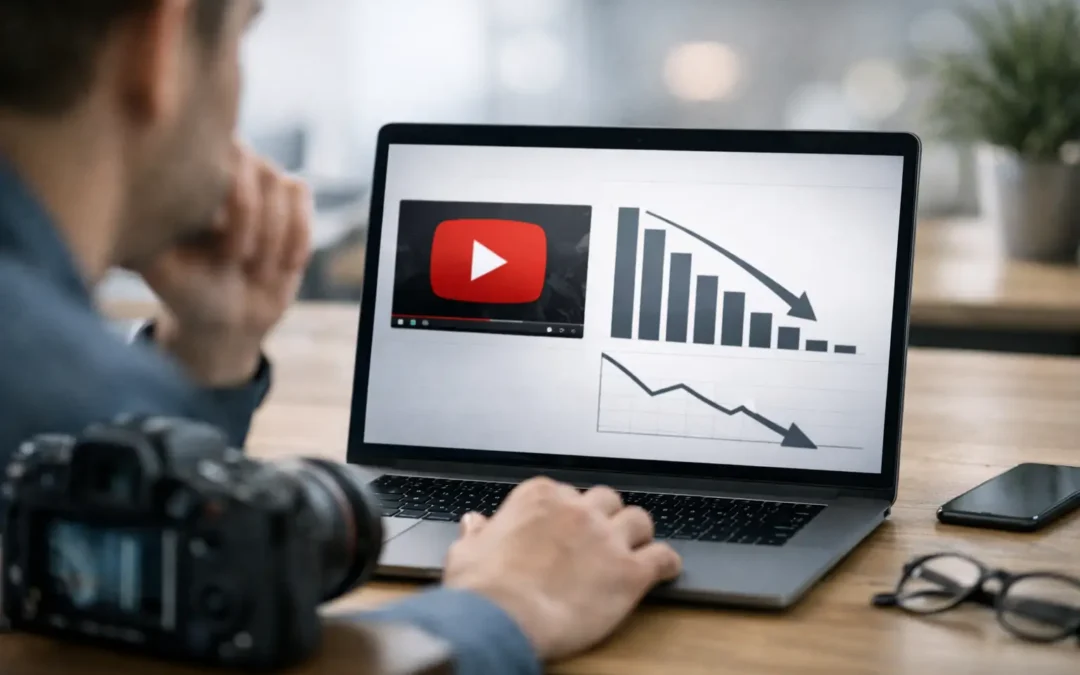
You publish a video, the title looks solid, the thumbnail feels decent, and then the analytics barely move. If you’re asking why are YouTube impressions low, you’re usually dealing with one of two problems: YouTube is not confident enough to test your video widely, or it tested the video and the response was too weak to keep expanding distribution.
That can feel frustrating, especially when the content itself is useful. But low impressions are not random. They usually point to a mismatch between your topic, packaging, audience targeting, or channel history. The good news is that impressions are one of the most fixable parts of YouTube growth once you know what they actually measure.
What low YouTube impressions really mean
An impression happens when YouTube shows your video thumbnail to a potential viewer on surfaces like Home, Search, Suggested, or subscriptions. So low impressions do not automatically mean your video is bad. It means YouTube is not showing it to many people yet.
That distinction matters. A video can have strong watch time from a small group and still get low impressions because YouTube has limited confidence in who else should see it. On the other hand, a video can get lots of impressions and still perform poorly if the thumbnail and title do not convert.
For most small and mid-sized creators, impressions are low because YouTube is still trying to understand three things: what the video is about, who it is for, and whether that audience is likely to respond.
Why are YouTube impressions low on new or smaller channels?
Smaller channels usually feel this issue more because they have less performance history. YouTube has fewer signals to work with, which means distribution starts narrower.
If your channel is new, inconsistent, or changing direction often, the system may not know which viewers to test first. That slows early reach. This is why niche clarity matters so much. A channel that posts budget camera tips, creator workflows, and YouTube strategy is easier to classify than a channel that posts gaming one week, business advice the next, and travel vlogs after that.
This does not mean you can never experiment. It means scattered uploads often reduce algorithmic confidence. When your content themes are connected, impressions usually become more stable over time.
Your topic may be too broad or too weak
Many creators blame thumbnails first, but topic selection is often the real issue. If the video covers something viewers are not actively interested in, the ceiling is low from the start.
A broad topic like “how to grow online” competes against thousands of better-defined videos. A sharper version like “how to get your first 100 YouTube subscribers with search-based videos” gives YouTube a clearer audience match. Specific topics tend to earn stronger initial signals because the right viewers know exactly why they should click.
Weak demand can also suppress impressions. If few people care about the subject, YouTube has less reason to push it aggressively. This is where strategic content planning beats guessing.
Your thumbnail and title are not earning the next round of testing
YouTube does not just hand out impressions equally. It tests videos in small pockets. If viewers respond well, the platform expands distribution. If they do not, impressions flatten.
That means your thumbnail and title affect impressions indirectly. They do not create reach on their own, but they influence whether YouTube keeps showing the video. If the click-through rate is weak compared with similar videos shown to a similar audience, your video may stop getting momentum.
The fix is not always to make thumbnails louder. It is to make them clearer. Strong packaging usually does three things: it promises one outcome, creates curiosity without being vague, and matches the actual content of the video.
Why are YouTube impressions low even when SEO seems fine?
This is where many creators get confused. Good SEO can help YouTube understand your video, especially in Search. But SEO alone does not guarantee broad impressions across Home and Suggested.
YouTube is a viewer-response platform first. Keywords help with classification, but viewer satisfaction drives scale. You can rank for a phrase, get a few search impressions, and still remain stuck if the video does not perform strongly once people click.
This is why metadata optimization has limits. Your title, description, and tags help with context, but they cannot rescue a weak topic or a poor viewer match. If your video is optimized for a keyword nobody in your audience cares much about, impressions may stay low even if the SEO work is technically correct.
Audience mismatch is a hidden impression killer
Sometimes the video is solid, but it is being shown to the wrong people first. That can happen if your recent upload history trained YouTube to expect a different kind of viewer.
For example, if your channel built traction from beginner editing tutorials and you suddenly publish advanced YouTube monetization strategy, your existing audience may not respond as strongly. Early click and watch signals can dip, which tells YouTube to slow down distribution.
This is one reason channel positioning matters. Growth is often faster when each video serves a similar viewer at a similar stage of the journey.
Your early retention may be weaker than you think
Creators often watch their own videos and feel the content is strong. But audience retention tells a harsher truth. If viewers click and leave quickly, YouTube learns that the packaging may be stronger than the viewing experience.
Low impressions can result from weak hooks, slow intros, delayed payoff, or confusing structure. Even if the information is good, a slow first 30 seconds can hurt your ability to earn more distribution.
This does not mean every video needs flashy editing. It means the opening should match the promise of the title and get to the point quickly. Clarity usually beats cleverness.
The channel-level factors that affect impressions
Not every impression problem lives inside one video. Sometimes the issue is the channel itself.
If your upload schedule is highly irregular, your audience may not be conditioned to respond. If your content quality swings dramatically from one upload to the next, YouTube gets mixed performance signals. If your niche is unclear, each upload starts with less momentum because the platform has to re-evaluate who might care.
There is also the trust factor. Channels build distribution history over time. When multiple videos satisfy a similar audience, YouTube becomes more willing to recommend future uploads in that content lane. This is why one-off viral attempts often underperform compared with a focused library strategy.
How to fix low impressions without chasing hacks
Start with your content angle. Before you change tags or rewrite descriptions, ask whether the topic is specific, relevant, and timely for your target viewer. Better topics usually outperform better optimization.
Then audit your packaging. Look at the title and thumbnail together, not separately. Do they communicate one clear idea? Would your intended viewer instantly understand the value? If the answer is no, YouTube may not get enough positive response to keep testing the video.
Next, review the first minute. If viewers are dropping early, improve the opening before assuming the algorithm is against you. Strong retention gives YouTube a reason to continue distribution.
After that, zoom out to the channel level. Are you serving one audience consistently, or posting disconnected ideas? Consistency does not mean repetition. It means your videos feel like they belong to the same creator for the same viewer.
One practical approach is to build content in clusters. Instead of posting random standalone videos, create a run of videos around one problem your audience wants solved. This helps both viewers and YouTube understand your channel faster. It is a strategy Tubeskill strongly encourages because it turns content into a compounding growth system rather than a series of isolated experiments.
When low impressions are normal
Not every low-impression video is a sign of failure. Some topics are naturally smaller. Some videos need time. Search-based videos often grow more slowly than browse-driven ones, especially if they solve evergreen problems.
Seasonality also matters. Viewer interest changes across the year, and some niches are more volatile than others. A tutorial about tax software for creators may spike in one season and go quiet in another. A video can also underperform at first and gain impressions later if other videos on your channel strengthen your audience profile.
That is why context matters. Compare a video against similar topics, similar formats, and similar traffic sources. A low-impression search tutorial is different from a low-impression browse-focused trend video.
The smarter mindset for growing impressions
The healthiest way to think about impressions is not “How do I force YouTube to show my video?” It is “How do I make YouTube more confident in this video?”
That shift changes everything. You stop chasing tricks and start improving signals: sharper topics, better audience alignment, clearer packaging, stronger retention, and more consistent channel positioning. Those are the inputs that lead to sustainable reach.
If your impressions are low right now, treat that as feedback, not a verdict. YouTube is telling you it needs a clearer reason to push your content. Give it one strong idea, one clear audience, and one compelling viewing experience at a time. That is how small channels start earning big opportunities.