
If your videos are getting a few clicks and then disappearing, the problem usually is not just SEO. When creators ask how to rank YouTube videos, they often focus on tags or keywords and miss the bigger picture. YouTube ranks videos based on how well they satisfy viewers, which means search optimization matters, but content quality, click appeal, and retention matter just as much.
That is good news for smaller creators. You do not need a massive channel to rank. You need a video that matches a real search intent, earns the click, and keeps people watching long enough for YouTube to trust it.
How to rank YouTube videos starts with search intent
Before you write a title or record a script, get clear on why someone would search for this topic. A person searching "best camera for YouTube" wants options and comparisons. A person searching "how to edit YouTube videos on iPhone" wants a step-by-step tutorial. If your video format does not match the reason behind the search, ranking will be harder even if your keyword placement is perfect.
A quick way to validate intent is to search your target phrase on YouTube and study the top results. Look at their titles, video length, thumbnails, and structure. If the page is filled with short tutorials, a 40-minute opinion piece is probably the wrong fit. If the top videos are aimed at beginners, a highly technical breakdown may underperform.
This is where many creators lose momentum. They make the video they want to make instead of the video the audience is already asking for. Ranking often starts with alignment, not originality.
Pick keywords with realistic ranking potential
Broad keywords are tempting, but they are usually crowded. If your channel is still growing, target specific phrases where your video can compete. Instead of going after "YouTube SEO," you may have a better shot with "YouTube SEO for beginners" or "how to rank YouTube shorts in search."
The best keywords usually sit at the intersection of three things: people are actively searching for them, you can genuinely solve the problem, and the current search results are not impossible to beat. That last part matters. If every top result comes from giant creator education channels with millions of views, a narrower variation is often the smarter move.
Long-tail keywords may bring less traffic per video, but they often convert better into watch time, subscribers, and trust. For beginner to intermediate creators, that is often a better growth path than chasing huge terms too early.
Where to place the keyword naturally
Your target phrase should appear in the title, be reflected in the opening of the description, and be spoken early in the video when it makes sense. You do not need to force exact-match repetition. YouTube is better at understanding topic relevance than many creators assume.
Use related language around the main phrase too. If your video is about how to rank YouTube videos, it is natural to mention click-through rate, audience retention, YouTube search, thumbnails, and metadata. That gives the platform more context about your content without making the writing feel stuffed.
Titles and thumbnails decide whether ranking sticks
A video can briefly appear in search and still fail if nobody clicks it. That is why title and thumbnail strategy is not separate from SEO. It is part of ranking.
Your title should promise a clear result, not just name the topic. "How to Rank YouTube Videos in 2026" is more compelling than "YouTube Video Ranking Tips" because it feels direct and current. Strong titles usually combine clarity, specificity, and a believable benefit.
Thumbnails need the same discipline. Do not try to say everything. One visual idea, a few words at most, and strong contrast are often enough. If your thumbnail is hard to understand at a small size, your click-through rate will likely suffer.
There is a trade-off here. A highly aggressive thumbnail may improve clicks but hurt retention if the content does not deliver on the promise. YouTube notices that mismatch. Sustainable ranking comes from accurate packaging, not bait.
Your first 30 seconds matter more than most creators think
Once someone clicks, YouTube starts collecting the signals that determine whether your video deserves more reach. The opening is where many rankings quietly die.
Do not spend the first 20 seconds on a long logo animation or vague intro. Tell viewers what they will get and why it is worth staying. Then start delivering fast. If the topic is "how to rank YouTube videos," open with the real tension: most videos do not fail because of tags, they fail because they do not satisfy viewers.
A strong hook improves retention, and retention strengthens ranking potential. This is especially important in search because users are comparing your video against several alternatives. If they bounce back quickly, that is a bad sign.
Structure for retention, not just information
Good educational videos move with purpose. Set up the problem, explain the strategy, show examples, and remove friction. That does not mean you need fast cuts every two seconds. It means every section should earn its place.
Watch time improves when creators remove repetition, tighten transitions, and preview what is coming next. Even simple phrases like "here is where most channels get this wrong" can help carry attention forward when used naturally.
Optimize the content around the video
Metadata still matters. It just does not carry the whole ranking job.
Write a description that quickly explains what the viewer will learn. Front-load the most important topic language in the first two lines. Add a few natural variations of the keyword if they fit. Tags are less influential than they used to be, but they can still help with context, especially for common misspellings or topic variants.
Your file name is not a magic ranking factor, so do not obsess over it. Instead, focus your effort on the parts viewers actually interact with and the parts YouTube uses to understand topic relevance.
Chapters can also help if your video covers multiple subtopics. They improve usability and can reinforce topical structure, which is useful for both viewers and search visibility.
Engagement helps, but satisfaction matters more
Creators often hear that comments, likes, and shares boost rankings. They can help, but not in a simple one-to-one way. A video with strong interaction but weak retention is unlikely to hold position for long. YouTube cares more about whether viewers feel the video solved their problem.
That is why audience satisfaction signals tend to compound. If people click, watch, and keep exploring your content after the video ends, your channel starts looking more reliable to the platform. This can make future rankings easier, especially within a niche.
One smart move is to build topical consistency. If you publish several high-quality videos around YouTube growth, editing, channel strategy, or monetization, YouTube gets a clearer picture of what your channel is about. Tubeskill teaches this kind of structured content approach because it builds authority over time instead of relying on one lucky upload.
Use analytics to improve rankings after publishing
Ranking is not always decided in the first day. Some videos climb slowly as YouTube gathers more data. That is why post-publish analysis matters.
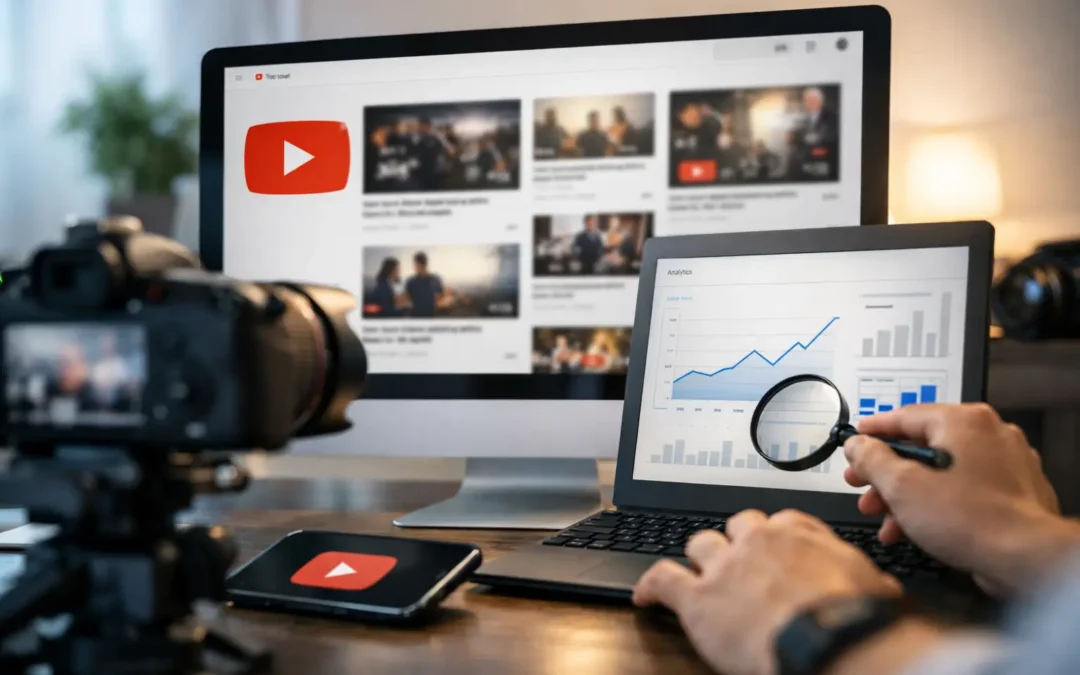
Start with click-through rate. If impressions are decent but clicks are low, your title or thumbnail likely needs work. If clicks are strong but average view duration is weak, the video may be attracting the wrong audience or losing people too early. If retention is solid but impressions stay low, the keyword may be too competitive or the topic too narrow.
This is where creators make smarter decisions. Instead of guessing, look for the bottleneck. Ranking problems usually live in one of three places: discoverability, clickability, or watchability.
When to update a video
If a video has a strong topic but underperforms, updating the title and thumbnail can be worth testing. Rewriting the description or adding chapters can help too. Re-uploading is usually not the first move unless the content itself is broken.
Give the video enough time to collect data before changing everything at once. If you make too many edits together, it becomes harder to tell what actually improved the result.
The channels that rank consistently do this differently
They do not treat SEO as a layer added at the end. They build the entire video around the viewer's goal. The topic is chosen with intent in mind, the packaging is built to earn the click, and the script is structured to hold attention. That full-system thinking is what helps videos rank and stay ranked.
If you want better search visibility, focus less on tricks and more on fit. Make the right video for a real query, package it clearly, and keep the viewer engaged once they arrive. That is how ranking becomes repeatable instead of random.
The best part is that every upload gives you more signal. One stronger title, one tighter intro, one better-matched topic at a time - that is often how a channel starts turning effort into real momentum.