
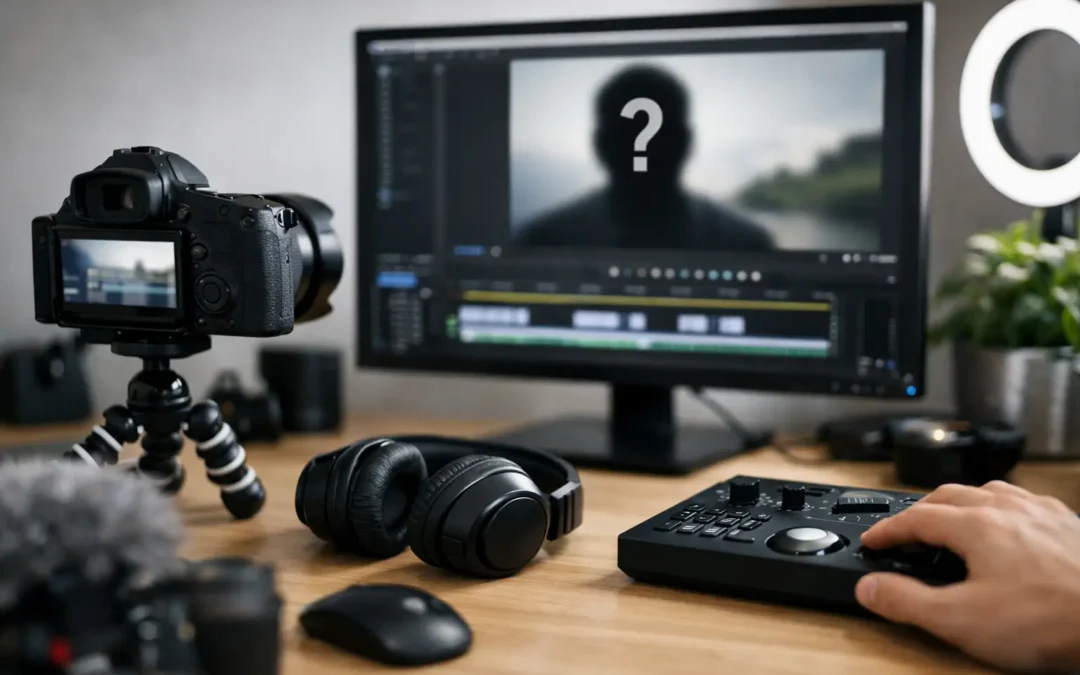
Some creators stall for months because they think YouTube requires a camera-ready personality, a polished studio, and the confidence to be on screen every week. It does not. A strong faceless YouTube channel guide starts with a simpler truth: viewers care more about value, clarity, and consistency than whether they ever see your face.
That is good news if you are camera-shy, short on time, building a channel around a business, or creating content that works better with visuals, voiceover, or screen recordings. Faceless channels are not a shortcut, though. They remove one barrier, but they replace it with another - your ideas, scripting, editing, pacing, and branding have to carry more of the load.
What a faceless YouTube channel guide should help you solve
A faceless channel is any YouTube channel that does not rely on the creator appearing on camera as the main content format. That can include tutorials with screen recordings, animated explainers, documentary-style videos, gaming content, finance breakdowns, ambient videos, story channels, productivity content, software walkthroughs, and even business education.
The reason this model appeals to so many beginners is obvious. It lowers the pressure to perform on camera and can make production more flexible. You can record voiceovers in batches, update visuals later, and build systems that are easier to repeat.
But the trade-off matters. If people do not connect with your face, they have to connect with your point of view, your storytelling, your editing style, or your usefulness. That means your channel strategy has to be tighter, not looser.
Start with a niche that works without your face
The best faceless channels pick topics where the value lives in information, transformation, entertainment, or atmosphere. In other words, the viewer should get what they came for even if they never see you.
That is why educational niches often perform well. Software tutorials, AI tools, budgeting tips, side hustle explainers, study advice, and productivity systems all translate naturally into faceless video. So do visual-first niches like travel facts, cinematic stock-footage storytelling, or relaxing soundscapes.
Where creators get stuck is choosing a niche that technically can be faceless but is much harder to differentiate. Generic motivation clips and low-effort quote compilations usually struggle because they are easy to copy and hard to brand. If your format can be replicated in an hour by hundreds of channels, growth gets harder fast.
A better test is this: can you explain exactly why someone would subscribe after one video? If the answer is vague, your niche is probably too broad. If the answer is clear, you are closer to something that can grow.
Pick a content format before you worry about tools
Most beginners shop for software too early. The smarter move is to choose a repeatable format first.
For example, a faceless educational channel might use a script, voiceover, screen recordings, text callouts, and a simple B-roll layer. A story-based channel might rely on narration, stock visuals, music, and motion graphics. A business channel might use slides, charts, and recorded walkthroughs.
This decision shapes everything else - how long production takes, what skills you need, how often you can publish, and what type of audience you attract. It also determines whether your channel is sustainable. A format that looks impressive but takes 20 hours per video is not always a good format for a solo creator.
Aim for a workflow you can repeat at least 20 times. That is a better growth strategy than building one beautiful video and then burning out.
Build the channel around scripting, not improvisation
Faceless content usually performs best when it is planned. Without facial expressions and direct camera presence, your script has to do more work.
A solid script starts by identifying one clear promise. What will the viewer learn, solve, compare, avoid, or achieve by the end of the video? Once that is locked in, structure the video so each section earns the next. Strong faceless videos move quickly because there is less room for rambling.
This does not mean every script needs to sound stiff. It means every line should have a job. The intro should create interest. The middle should deliver useful information in the right order. The ending should give the viewer a reason to keep watching your channel.
If you are new, write tighter than you think you need to. Viewers are patient when the content is compelling, but not when it is repetitive.
Use your voice if you can, but know the alternatives
One of the biggest questions in any faceless YouTube channel guide is voice. Should you narrate your videos yourself?
Usually, yes. A real voice helps with trust, pacing, and brand identity. It gives your channel personality without requiring on-camera presence. Even if your voice is not perfect, it is often better for long-term differentiation than sounding like everyone else.
That said, it depends on your niche and comfort level. Some creators use text-only formats. Others use AI voice tools, especially in highly visual explainer content. The risk is that generic narration can make your videos feel interchangeable. If you go that route, your scripting and editing need to be especially strong.
The goal is not to sound polished. It is to sound intentional.
Make simple videos that look organized
Faceless channels do not need expensive production, but they do need visual control. Messy visuals make viewers click away even when the information is good.
At a minimum, your videos should have readable text, consistent fonts, balanced pacing, and visuals that match what is being said. If you are teaching something on screen, zoom into the right details. If you are using B-roll, avoid random clips that feel disconnected from the message. If you are using subtitles, make them easy to read and consistent across videos.
The strongest beginner channels often look simple, not flashy. They use the same thumbnail style, familiar structure, and predictable editing language. That consistency builds recognition over time.
SEO still matters, but packaging matters more
A lot of creators focus on tags or minor metadata details while ignoring the bigger issue: would anyone actually click this video?
For faceless channels, packaging is often the difference between growth and invisibility. Your title needs to promise a clear outcome or spark strong curiosity. Your thumbnail needs to support that promise in a clean, fast-reading way. And your topic should meet existing demand or create immediate relevance.
Search-based content can be a great place to start because it gives your videos a clearer job. Tutorials, comparisons, and problem-solving content tend to work well here. But search alone is not enough. If your video ranks but the packaging is weak, impressions will not turn into views.
This is where strategy beats volume. One focused video that solves a real problem can outperform five generic uploads.
Monetization is possible, but quality filters the results
Yes, faceless channels can make money through ad revenue, affiliates, digital products, services, and lead generation. But monetization depends heavily on niche, watch time, audience intent, and originality.
Some niches earn more because advertisers value the audience more. Finance, software, business, and productivity often have stronger revenue potential than entertainment clips with weak viewer intent. At the same time, high-earning niches are usually more competitive.
There is also a platform reality to respect. Low-effort, reused, or overly automated content may struggle with monetization and long-term trust. If your videos feel mass-produced, that can limit both growth and revenue. The safer path is building original content with a clear editorial standard.
A beginner workflow that actually scales
If you are starting from zero, keep your system lean. Research topics based on clear viewer demand. Write concise scripts around one promise. Record voiceovers in batches if possible. Edit with a consistent template. Then review analytics for retention, click-through rate, and viewer response.
That last step is where real growth happens. A faceless channel can become highly efficient because it is easier to test formats, titles, lengths, and hooks. Over time, those small improvements compound.
This is also why creator education matters. A disciplined approach helps you avoid wasting energy on trends that do not fit your goals. Platforms like Tubeskill exist for that exact reason - to make channel-building feel less chaotic and more strategic.
What to expect in the first 90 days
Most new faceless channels grow slower than their creators hope. That is normal. You are not just publishing videos. You are building a repeatable production system, learning what your audience responds to, and improving your packaging.
The first wins usually come from clarity, not virality. A better topic choice. A stronger hook. A thumbnail that finally gets clicks. A format that takes half the time to produce. These are the signals that matter early on.
If you stay focused, a faceless channel can become one of the most practical ways to build on YouTube. You can protect your privacy, create consistently, and grow around skill rather than on-camera confidence. Start with a format you can sustain, make each video more useful than the last, and let your channel earn attention through precision.