
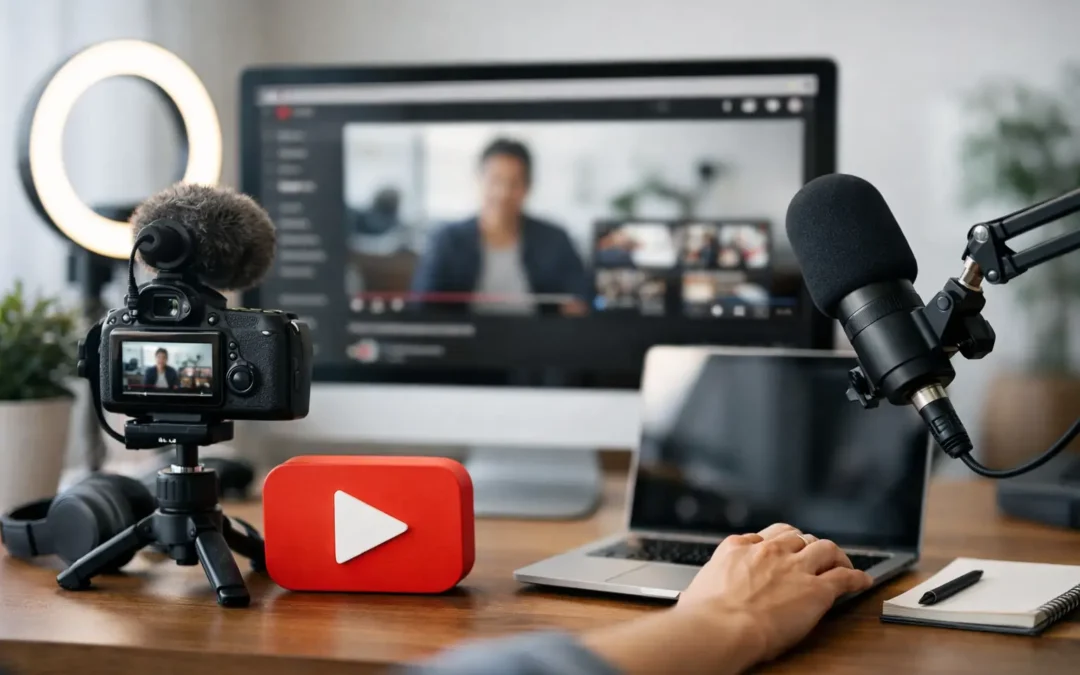
Most new creators don’t fail because they picked the wrong camera. They stall because they start posting before they’ve made a few key decisions about who they’re helping, what they’re making, and why anyone should come back for the next video. If you’re figuring out how to start YouTube channel growth on solid footing, that early clarity matters more than your intro animation ever will.
YouTube rewards consistency, relevance, and viewer satisfaction. That’s good news for beginners, because all three are learnable. You do not need a giant budget or a production team. You need a channel plan that is simple enough to execute and sharp enough to attract the right audience.
How to start YouTube channel with a clear strategy
Before you create banner art or brainstorm 100 video ideas, define the job of your channel. Ask a practical question: what kind of viewer do you want to attract, and what result should they get from your videos?
A strong channel usually sits at the intersection of three things: your knowledge or interest, audience demand, and repeatable content ideas. If you love fitness but only want to post random workout clips, growth may feel scattered. If you focus instead on beginner home workouts for busy professionals, you’ve already made your channel easier to understand and easier to subscribe to.
This is where many creators overcomplicate things. You do not need a niche so narrow that you run out of content in two weeks. You need a niche clear enough that a new viewer can instantly tell why your channel exists. Broad topics like business, gaming, beauty, or education can work, but they usually grow faster when framed around a specific audience, outcome, or format.
Set up your channel for trust, not just looks
Once your direction is clear, build the channel around credibility. Your name, profile photo, banner, and description should all support the same message. If your channel is about beginner investing, everything should reinforce that focus. If your brand says tech reviews but your banner looks like a lifestyle vlog, you create friction before anyone watches a video.
Your channel description does not need to sound polished for the sake of it. It should explain who the channel is for, what kind of videos viewers can expect, and why they should subscribe. Keep it specific. A line like “Weekly tutorials to help small business owners use YouTube for lead generation” is stronger than “Helping you succeed online.”
You should also organize your channel basics early. Upload a clean profile image, create a banner that is readable on mobile, and complete your About section. These are small details, but together they help your channel feel intentional. For a new creator, trust signals matter because viewers are deciding in seconds whether you’re worth another click.
Start with content pillars, not random ideas
The easiest way to burn out is to treat every upload like a brand-new identity. Instead, create three to five content pillars. These are recurring categories that keep your channel focused while giving you enough variety to stay creative.
For example, a channel about YouTube growth might center on channel setup, video SEO, content strategy, and creator tools. A cooking channel might focus on budget meals, meal prep, and beginner techniques. Pillars make planning easier because each new idea fits into a system instead of floating on its own.
This approach also helps the algorithm understand your channel over time. YouTube does not need you to post the exact same video forever, but it does respond well when your content consistently serves a similar audience. If one week you upload a podcast clip, the next week a travel vlog, and the next a Photoshop tutorial, you’re giving mixed signals.
Your first videos should solve real problems
When thinking about how to start YouTube channel content, many beginners ask what they should post first. The better question is what your target viewer is already searching for or struggling with.
Early videos tend to perform better when they address a clear need. Tutorials, beginner explainers, comparisons, and mistake-based topics often work well because they meet demand directly. “How to edit videos on your phone,” “Best budget microphones for YouTube,” or “3 mistakes new real estate channels make” all give viewers a reason to click.
This does not mean every video has to be search-first forever. But in the beginning, practical topics can help you earn your first views, learn what your audience responds to, and build confidence on camera. Think of your first 10 to 20 videos as training reps. They are not just content for viewers. They are feedback for you.
Keep your gear simple and your message strong
A lot of creators wait too long because they assume decent videos require expensive equipment. In most cases, a smartphone, natural light, and clear audio are enough to start. Viewers will forgive average visuals sooner than they’ll forgive confusing content or hard-to-hear sound.
If you have a small budget, prioritize audio first. A basic microphone can improve perceived quality fast. Good lighting comes next. Cameras matter, but not as much as framing, energy, and clarity.
There is a trade-off here. Better production can help with retention, especially in competitive niches. But higher production also increases friction if it makes posting slower. For a beginner, the right setup is the one you can use consistently. Clean and reliable beats ambitious and delayed.
Learn the basics of YouTube SEO early
YouTube SEO is not about stuffing keywords into every field. It is about helping the platform understand your video and helping the right viewer choose it.
Start with topics people actually care about. Then write titles that are clear and compelling, not vague. A thumbnail should support the promise of the title, not repeat it word for word. Your description can add context, and your spoken content should align with the main topic so YouTube can better categorize the video.
If you’re teaching something, front-load the value. Viewers should know quickly that they’re in the right place. That first 15 to 30 seconds matters because retention starts there. If people leave immediately, strong keywords will not save the video.
For beginners, SEO and audience satisfaction should work together. Search can help people find you. Retention and watch behavior help YouTube trust you with more distribution.
Publish on a schedule you can actually keep
Consistency helps, but only if it is realistic. Posting every week is great if you can sustain it without sacrificing quality or quitting after a month. Posting every other week is also fine if the content is strong and your process is stable.
A smart publishing rhythm depends on your niche, your editing workload, and your available time. Tutorials may take longer than reaction videos. A solo business owner using YouTube for marketing will have different capacity than a full-time creator.
The key is to avoid building your channel around your most motivated week. Build it around your normal week. That is the schedule you can maintain when life gets busy.
Use analytics as direction, not judgment
Once you publish a few videos, start studying performance without turning every upload into a personal referendum. Click-through rate can tell you if your topic, title, and thumbnail are working. Audience retention can show where viewers lose interest. Returning viewers can signal whether your channel is earning habit and trust.
Do not expect perfect data right away. Small channels often have noisy numbers. What matters is pattern recognition. If one topic consistently gets better retention, that is a clue. If viewers drop when your intros run too long, fix the opening. If your browse traffic grows when you stay within one content pillar, lean into it.
This is where growth becomes measurable instead of emotional. Platforms like Tubeskill often emphasize this shift for good reason. Creators improve faster when they stop guessing and start observing.
Make subscribing feel logical
A viewer subscribes when they understand what future value they’ll get. That means your channel needs a recognizable promise. If your videos feel disconnected, people may enjoy one but see no reason to commit.
You can reinforce this by mentioning what else viewers should expect from your channel and by creating related videos that naturally lead into one another. A strong channel does not just publish isolated uploads. It builds momentum across topics that fit together.
That also means patience matters. Many channels look slow at first because trust compounds gradually. One useful video leads to another. A few good thumbnails improve click behavior. Better intros improve retention. Over time, your channel becomes easier for YouTube to recommend because your content sends clearer signals.
If you want to start well, think less about going viral and more about becoming useful on purpose. A YouTube channel grows when viewers can quickly understand who it serves, what it does well, and why it is worth returning to. Get that right, and each video starts working harder for the next one.